
Farm Equipment Mechanics and Service Technicians
Does this career fit your work personality?
Begin The Career Assessment Test- Best Fitting Careers
- Work Personality Strengths
- Work Style Preferences
- and more
Job Outlook
Overall employment of heavy vehicle and mobile equipment service technicians is projected to grow 6 percent from 2022 to 2032, faster than the average for all occupations.
About 21,100 openings for heavy vehicle and mobile equipment service technicians are projected each year, on average, over the decade. Many of those openings are expected to result from the need to replace workers who transfer to different occupations or exit the labor force, such as to retire.
Education Details
Summary of What they do:
Diagnose, adjust, repair, or overhaul farm machinery and vehicles, such as tractors, harvesters, dairy equipment, and irrigation systems.
What Heavy Vehicle and Mobile Equipment Service Technicians Do
Heavy vehicle and mobile equipment service technicians, also called mechanics, inspect, maintain, and repair vehicles and machinery used in construction, farming, rail transportation, and other industries.
Duties
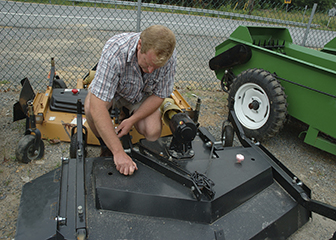
Heavy vehicle and mobile equipment service technicians typically do the following:
- Consult equipment operating manuals, blueprints, and drawings
- Perform scheduled maintenance, such as cleaning and lubricating parts
- Diagnose and identify malfunctions, using computerized tools and equipment
- Inspect, repair, and replace defective or worn parts, such as bearings, pistons, and gears
- Overhaul and test major components, such as engines, hydraulic systems, and electrical systems
- Disassemble and reassemble heavy equipment and components
- Travel to worksites to repair large equipment, such as cranes
- Maintain logs of equipment condition and work performed
Heavy vehicles and mobile equipment are critical to many industrial activities, including construction and railroad transportation. Various types of equipment, such as tractors, cranes, and bulldozers, are used to haul materials, till land, lift beams, and dig earth to pave the way for development and construction.
Heavy vehicle and mobile equipment service technicians repair and maintain engines, hydraulic systems, transmissions, and electrical systems of agricultural, industrial, construction, and rail equipment. They ensure the performance and safety of fuel lines, brakes, and other systems.
These service technicians use diagnostic computers and equipment to identify problems and make adjustments or repairs. For example, they may use an oscilloscope to observe the signals produced by electronic components. Service technicians also use many different power and machine tools, including pneumatic wrenches, lathes, and welding equipment. A pneumatic tool, such as an impact wrench, is a tool powered by compressed air.
Service technicians also use many different hand tools, such as screwdrivers, pliers, and wrenches, to work on small parts and in hard-to-reach areas. They generally purchase these tools over the course of their careers, often investing thousands of dollars in their inventory.
After identifying malfunctioning equipment, service technicians repair, replace, and recalibrate components such as hydraulic pumps and spark plugs. Doing this may involve disassembling and reassembling major equipment or making adjustments through an onboard computer program.
The following are examples of types of heavy vehicle and mobile equipment service technicians:
Farm equipment mechanics and service technicians service and repair farm equipment, such as tractors and harvesters. They also work on smaller consumer-grade lawn and garden tractors. Most work for dealer repair shops, where farmers increasingly send their equipment for maintenance.
Mobile heavy equipment mechanics repair and maintain construction and surface mining equipment, such as bulldozers, cranes, graders, and excavators. Most work for governments, equipment rental and leasing shops, and large construction and mining companies.
Rail car repairers specialize in servicing railroad locomotives, subway cars, and other rolling stock. They usually work for railroads, public and private transit companies, and railcar manufacturers.
Mechanics who work primarily on automobiles are described in the profile on automotive service technicians and mechanics.
Mechanics who work primarily on large trucks and buses are described in the profile on diesel service technicians and mechanics.
Mechanics who work primarily on motorboats, motorcycles, and small all-terrain vehicles are described in the profile on small engine mechanics.
Important Qualities
Dexterity. Heavy vehicle and mobile equipment service technicians must perform many tasks, such as disassembling engine parts, connecting or attaching components, and using hand tools, with a steady hand and good hand-eye coordination.
Mechanical skills. Heavy vehicle and mobile equipment service technicians must be familiar with engine components and systems and know how they interact with each other. They must often disassemble major parts for repairs and be able to reassemble them.
Organizational skills. Heavy vehicle and mobile equipment service technicians must maintain accurate service records and parts inventories.
Physical strength. Heavy vehicle and mobile equipment service technicians must be able to lift and move heavy equipment, tools, and parts without risking injury.
Troubleshooting skills. Heavy vehicle and mobile equipment service technicians must be familiar with diagnostic equipment to find the source of malfunctions.
Tasks On The Job
- Calculate bills according to record of repairs made, labor time, and parts used.
- Clean and lubricate parts.
- Dismantle defective machines for repair, using hand tools.
- Drive trucks to haul tools and equipment for on-site repair of large machinery.
- Examine and listen to equipment, read inspection reports, and confer with customers to locate and diagnose malfunctions.
- Fabricate new metal parts, using drill presses, engine lathes, and other machine tools.
- Install and repair agricultural irrigation, plumbing, and sprinkler systems.
- Maintain, repair, and overhaul farm machinery and vehicles, such as tractors, harvesters, and irrigation systems.
- Reassemble machines and equipment following repair, testing operation and making adjustments, as necessary.
- Record details of repairs made and parts used.
- Repair bent or torn sheet metal.
- Repair or replace defective parts, using hand tools, milling and woodworking machines, lathes, welding equipment, grinders, or saws.
- Test and replace electrical components and wiring, using test meters, soldering equipment, and hand tools.
- Tune or overhaul engines.





PERSONALITY
| Your Assessment Results |
CAREER CHARACTERISTICS
Importance
|
|---|
|
?
? ? ?
|
85% | Dependability - Job requires being reliable, responsible, and dependable, and fulfilling obligations. | |
|
?
? ? ?
|
84% | Attention to Detail - Job requires being careful about detail and thorough in completing work tasks. | |
|
?
? ? ?
|
78% | Self-Control - Job requires maintaining composure, keeping emotions in check, controlling anger, and avoiding aggressive behavior, even in very difficult situations. | |
|
?
? ? ?
|
77% | Integrity - Job requires being honest and ethical. | |
|
?
? ? ?
|
76% | Persistence - Job requires persistence in the face of obstacles. | |
|
?
? ? ?
|
76% | Cooperation - Job requires being pleasant with others on the job and displaying a good-natured, cooperative attitude. | |
|
?
? ? ?
|
74% | Analytical Thinking - Job requires analyzing information and using logic to address work-related issues and problems. | |
|
?
? ? ?
|
72% | Concern for Others - Job requires being sensitive to others' needs and feelings and being understanding and helpful on the job. | |
|
?
? ? ?
|
71% | Adaptability/Flexibility - Job requires being open to change (positive or negative) and to considerable variety in the workplace. | |
|
?
? ? ?
|
71% | Independence - Job requires developing one's own ways of doing things, guiding oneself with little or no supervision, and depending on oneself to get things done. | |
|
?
? ? ?
|
70% | Achievement/Effort - Job requires establishing and maintaining personally challenging achievement goals and exerting effort toward mastering tasks. | |
|
?
? ? ?
|
70% | Initiative - Job requires a willingness to take on responsibilities and challenges. | |
|
?
? ? ?
|
69% | Innovation - Job requires creativity and alternative thinking to develop new ideas for and answers to work-related problems. | |
|
?
? ? ?
|
68% | Stress Tolerance - Job requires accepting criticism and dealing calmly and effectively with high-stress situations. | |
|
?
? ? ?
|
65% | Social Orientation - Job requires preferring to work with others rather than alone, and being personally connected with others on the job. | |
|
?
? ? ?
|
60% | Leadership - Job requires a willingness to lead, take charge, and offer opinions and direction. | |
| Your Assessment Results |
IMPORTANT STRENGTHS
Importance
|
|---|
|
?
? ? ?
|
100% | Realistic - Work involves designing, building, or repairing of equipment, materials, or structures, engaging in physical activity, or working outdoors. Realistic occupations are often associated with engineering, mechanics and electronics, construction, woodworking, transportation, machine operation, agriculture, animal services, physical or manual labor, athletics, or protective services. | |
|
?
? ? ?
|
55% | Conventional - Work involves following procedures and regulations to organize information or data, typically in a business setting. Conventional occupations are often associated with office work, accounting, mathematics/statistics, information technology, finance, or human resources. | |
| Your Assessment Results |
WORK VALUES
Importance
|
|---|
|
?
? ? ?
|
72% | Support - Occupations that satisfy this work value offer supportive management that stands behind employees. Corresponding needs are Company Policies, Supervision: Human Relations and Supervision: Technical. | |
|
?
? ? ?
|
61% | Independence - Occupations that satisfy this work value allow employees to work on their own and make decisions. Corresponding needs are Creativity, Responsibility and Autonomy. | |
APTITUDES
| Your Assessment Results |
ABILITIES | SKILLS
Importance
|
|---|
|
?
? ? ?
|
75% | Manual Dexterity - The ability to quickly move your hand, your hand together with your arm, or your two hands to grasp, manipulate, or assemble objects. | |
|
?
? ? ?
|
75% | Finger Dexterity - The ability to make precisely coordinated movements of the fingers of one or both hands to grasp, manipulate, or assemble very small objects. | |
|
?
? ? ?
|
75% | Control Precision - The ability to quickly and repeatedly adjust the controls of a machine or a vehicle to exact positions. | |
|
?
? ? ?
|
75% | Multilimb Coordination - The ability to coordinate two or more limbs (for example, two arms, two legs, or one leg and one arm) while sitting, standing, or lying down. It does not involve performing the activities while the whole body is in motion. | |
|
?
? ? ?
|
72% | Problem Sensitivity - The ability to tell when something is wrong or is likely to go wrong. It does not involve solving the problem, only recognizing that there is a problem. | |
|
?
? ? ?
|
72% | Visualization - The ability to imagine how something will look after it is moved around or when its parts are moved or rearranged. | |
|
?
? ? ?
|
72% | Near Vision - The ability to see details at close range (within a few feet of the observer). | |
|
?
? ? ?
|
69% | Deductive Reasoning - The ability to apply general rules to specific problems to produce answers that make sense. | |
|
?
? ? ?
|
69% | Arm-Hand Steadiness - The ability to keep your hand and arm steady while moving your arm or while holding your arm and hand in one position. | |
|
?
? ? ?
|
66% | Extent Flexibility - The ability to bend, stretch, twist, or reach with your body, arms, and/or legs. | |
|
?
? ? ?
|
63% | Inductive Reasoning - The ability to combine pieces of information to form general rules or conclusions (includes finding a relationship among seemingly unrelated events). | |
|
?
? ? ?
|
63% | Information Ordering - The ability to arrange things or actions in a certain order or pattern according to a specific rule or set of rules (e.g., patterns of numbers, letters, words, pictures, mathematical operations). | |
|
?
? ? ?
|
60% | Oral Comprehension - The ability to listen to and understand information and ideas presented through spoken words and sentences. | |
|
?
? ? ?
|
60% | Written Comprehension - The ability to read and understand information and ideas presented in writing. | |
|
?
? ? ?
|
60% | Flexibility of Closure - The ability to identify or detect a known pattern (a figure, object, word, or sound) that is hidden in other distracting material. | |
|
?
? ? ?
|
60% | Hearing Sensitivity - The ability to detect or tell the differences between sounds that vary in pitch and loudness. | |
|
?
? ? ?
|
59% | Equipment Maintenance - Performing routine maintenance on equipment and determining when and what kind of maintenance is needed. | |
|
?
? ? ?
|
59% | Repairing - Repairing machines or systems using the needed tools. | |
|
?
? ? ?
|
56% | Oral Expression - The ability to communicate information and ideas in speaking so others will understand. | |
|
?
? ? ?
|
56% | Selective Attention - The ability to concentrate on a task over a period of time without being distracted. | |
|
?
? ? ?
|
56% | Static Strength - The ability to exert maximum muscle force to lift, push, pull, or carry objects. | |
|
?
? ? ?
|
56% | Trunk Strength - The ability to use your abdominal and lower back muscles to support part of the body repeatedly or continuously over time without "giving out" or fatiguing. | |
|
?
? ? ?
|
56% | Visual Color Discrimination - The ability to match or detect differences between colors, including shades of color and brightness. | |
|
?
? ? ?
|
56% | Auditory Attention - The ability to focus on a single source of sound in the presence of other distracting sounds. | |
|
?
? ? ?
|
56% | Speech Recognition - The ability to identify and understand the speech of another person. | |
|
?
? ? ?
|
55% | Troubleshooting - Determining causes of operating errors and deciding what to do about it. | |
|
?
? ? ?
|
53% | Perceptual Speed - The ability to quickly and accurately compare similarities and differences among sets of letters, numbers, objects, pictures, or patterns. The things to be compared may be presented at the same time or one after the other. This ability also includes comparing a presented object with a remembered object. | |
|
?
? ? ?
|
53% | Speech Clarity - The ability to speak clearly so others can understand you. | |
|
?
? ? ?
|
52% | Critical Thinking - Using logic and reasoning to identify the strengths and weaknesses of alternative solutions, conclusions, or approaches to problems. | |
| Your Assessment Results |
TASKS | ACTIVITIES
Importance
|
|---|
|
?
? ? ?
|
90% | Repairing and Maintaining Mechanical Equipment - Servicing, repairing, adjusting, and testing machines, devices, moving parts, and equipment that operate primarily on the basis of mechanical (not electronic) principles. | |
|
?
? ? ?
|
80% | Inspecting Equipment, Structures, or Materials - Inspecting equipment, structures, or materials to identify the cause of errors or other problems or defects. | |
|
?
? ? ?
|
79% | Getting Information - Observing, receiving, and otherwise obtaining information from all relevant sources. | |
|
?
? ? ?
|
78% | Repairing and Maintaining Electronic Equipment - Servicing, repairing, calibrating, regulating, fine-tuning, or testing machines, devices, and equipment that operate primarily on the basis of electrical or electronic (not mechanical) principles. | |
|
?
? ? ?
|
77% | Handling and Moving Objects - Using hands and arms in handling, installing, positioning, and moving materials, and manipulating things. | |
|
?
? ? ?
|
77% | Operating Vehicles, Mechanized Devices, or Equipment - Running, maneuvering, navigating, or driving vehicles or mechanized equipment, such as forklifts, passenger vehicles, aircraft, or watercraft. | |
|
?
? ? ?
|
75% | Documenting/Recording Information - Entering, transcribing, recording, storing, or maintaining information in written or electronic/magnetic form. | |
|
?
? ? ?
|
74% | Controlling Machines and Processes - Using either control mechanisms or direct physical activity to operate machines or processes (not including computers or vehicles). | |
|
?
? ? ?
|
74% | Identifying Objects, Actions, and Events - Identifying information by categorizing, estimating, recognizing differences or similarities, and detecting changes in circumstances or events. | |
|
?
? ? ?
|
71% | Updating and Using Relevant Knowledge - Keeping up-to-date technically and applying new knowledge to your job. | |
|
?
? ? ?
|
71% | Communicating with Supervisors, Peers, or Subordinates - Providing information to supervisors, co-workers, and subordinates by telephone, in written form, e-mail, or in person. | |
|
?
? ? ?
|
70% | Performing General Physical Activities - Performing general physical activities includes doing activities that require considerable use of your arms and legs and moving your whole body, such as climbing, lifting, balancing, walking, stooping, and handling materials. | |
|
?
? ? ?
|
70% | Working with Computers - Using computers and computer systems (including hardware and software) to program, write software, set up functions, enter data, or process information. | |
|
?
? ? ?
|
70% | Making Decisions and Solving Problems - Analyzing information and evaluating results to choose the best solution and solve problems. | |
|
?
? ? ?
|
69% | Organizing, Planning, and Prioritizing Work - Developing specific goals and plans to prioritize, organize, and accomplish your work. | |
|
?
? ? ?
|
68% | Communicating with People Outside the Organization - Communicating with people outside the organization, representing the organization to customers, the public, government, and other external sources. This information can be exchanged in person, in writing, or by telephone or e-mail. | |
|
?
? ? ?
|
66% | Establishing and Maintaining Interpersonal Relationships - Developing constructive and cooperative working relationships with others, and maintaining them over time. | |
|
?
? ? ?
|
66% | Performing for or Working Directly with the Public - Performing for people or dealing directly with the public. This includes serving customers in restaurants and stores, and receiving clients or guests. | |
|
?
? ? ?
|
63% | Monitoring Processes, Materials, or Surroundings - Monitoring and reviewing information from materials, events, or the environment, to detect or assess problems. | |
|
?
? ? ?
|
63% | Interpreting the Meaning of Information for Others - Translating or explaining what information means and how it can be used. | |
|
?
? ? ?
|
61% | Judging the Qualities of Objects, Services, or People - Assessing the value, importance, or quality of things or people. | |
|
?
? ? ?
|
57% | Thinking Creatively - Developing, designing, or creating new applications, ideas, relationships, systems, or products, including artistic contributions. | |
|
?
? ? ?
|
54% | Drafting, Laying Out, and Specifying Technical Devices, Parts, and Equipment - Providing documentation, detailed instructions, drawings, or specifications to tell others about how devices, parts, equipment, or structures are to be fabricated, constructed, assembled, modified, maintained, or used. | |
|
?
? ? ?
|
52% | Analyzing Data or Information - Identifying the underlying principles, reasons, or facts of information by breaking down information or data into separate parts. | |
| Your Assessment Results |
CONTEXT | ATTRIBUTES
Importance
|
|---|
|
?
? ? ?
|
96% | Wear Common Protective or Safety Equipment such as Safety Shoes, Glasses, Gloves, Hearing Protection, Hard Hats, or Life Jackets - How often does this job require wearing common protective or safety equipment such as safety shoes, glasses, gloves, hearing protection, hard hats or life-jackets? | |
|
?
? ? ?
|
92% | Spend Time Using Your Hands to Handle, Control, or Feel Objects, Tools, or Controls - How much does this job require using your hands to handle, control, or feel objects, tools or controls? | |
|
?
? ? ?
|
91% | Exposed to Contaminants - How often does this job require working exposed to contaminants (such as pollutants, gases, dust or odors)? | |
|
?
? ? ?
|
88% | Exposed to Sounds, Noise Levels that are Distracting or Uncomfortable - How often does this job require working exposed to sounds and noise levels that are distracting or uncomfortable? | |
|
?
? ? ?
|
86% | Face-to-Face Discussions with Individuals and Within Teams - How frequently does your job require face-to-face discussions with individuals and within teams? | |
|
?
? ? ?
|
85% | Importance of Being Exact or Accurate - How important is being very exact or highly accurate in performing this job? | |
|
?
? ? ?
|
85% | Spend Time Standing - How much does this job require standing? | |
|
?
? ? ?
|
85% | Freedom to Make Decisions - How much decision making freedom, without supervision, does the job offer? | |
|
?
? ? ?
|
85% | Contact With Others - How much does this job require the worker to be in contact with others (face-to-face, by telephone, or otherwise) in order to perform it? | |
|
?
? ? ?
|
82% | Indoors, Not Environmentally Controlled - How often does this job require working in an environment that is not environmentally controlled (like a warehouse without air conditioning)? | |
|
?
? ? ?
|
82% | Impact of Decisions on Co-workers or Company Results - What results do your decisions usually have on other people or the image or reputation or financial resources of your employer? | |
|
?
? ? ?
|
81% | Spend Time Bending or Twisting Your Body - How much does this job require bending or twisting your body? | |
|
?
? ? ?
|
80% | Exposed to Cramped Work Space, Awkward Positions - How often does this job require working in cramped work spaces that requires getting into awkward positions? | |
|
?
? ? ?
|
79% | Frequency of Decision Making - How often is the worker required to make decisions that affect other people, the financial resources, and/or the image and reputation of the organization? | |
|
?
? ? ?
|
78% | Exposed to Hazardous Equipment - How often does this job require exposure to hazardous equipment? | |
|
?
? ? ?
|
77% | Time Pressure - How often does this job require the worker to meet strict deadlines? | |
|
?
? ? ?
|
75% | Work With or Contribute to a Work Group or Team - How important is it to work with or contribute to a work group or team in this job? | |
|
?
? ? ?
|
72% | Spend Time Making Repetitive Motions - How much does this job require making repetitive motions? | |
|
?
? ? ?
|
71% | In an Open Vehicle or Operating Equipment - How often does this job require working in an open vehicle or operating equipment (like a tractor)? | |
|
?
? ? ?
|
70% | Health and Safety of Other Workers - How much responsibility is there for the health and safety of others in this job? | |
|
?
? ? ?
|
70% | Exposed to Very Hot or Cold Temperatures - How often does this job require working in very hot (above 90 F degrees) or very cold (below 32 F degrees) temperatures? | |
|
?
? ? ?
|
68% | Determine Tasks, Priorities and Goals - How much freedom does the worker have in determining the tasks, priorities, or goals of the job? | |
|
?
? ? ?
|
67% | Outdoors, Exposed to All Weather Conditions - How often does this job require working outdoors, exposed to all weather conditions? | |
|
?
? ? ?
|
66% | Telephone Conversations - How often do you have telephone conversations in this job? | |
|
?
? ? ?
|
63% | Spend Time Kneeling, Crouching, Stooping, or Crawling - How much does this job require kneeling, crouching, stooping or crawling? | |
|
?
? ? ?
|
63% | Deal With External Customers or the Public in General - How important is it to deal with external customers (as in retail sales) or the public in general (as in police work) in this job? | |
|
?
? ? ?
|
63% | In an Enclosed Vehicle or Operate Enclosed Equipment - How often does this job require working in a closed vehicle or operate enclosed equipment (like a car)? | |
|
?
? ? ?
|
60% | Spend Time Walking or Running - How much does this job require walking or running? | |
|
?
? ? ?
|
60% | Consequence of Error - How serious would the result usually be if the worker made a mistake that was not easily correctable? | |
|
?
? ? ?
|
59% | Importance of Repeating Same Tasks - How important are continuous, repetitive, physical activities (like key entry) or mental activities (like checking entries in a ledger) to performing this job? | |
|
?
? ? ?
|
59% | Outdoors, Under Cover - How often does this job require working outdoors, under cover (like in an open shed)? | |
|
?
? ? ?
|
59% | Exposed to Minor Burns, Cuts, Bites, or Stings - How often does this job require exposure to minor burns, cuts, bites, or stings? | |
|
?
? ? ?
|
58% | Exposed to Extremely Bright or Inadequate Lighting Conditions - How often does this job require working in extremely bright or inadequate lighting conditions? | |
|
?
? ? ?
|
57% | Physical Proximity - To what extent does this job require the worker to perform job tasks physically close to other people? | |
|
?
? ? ?
|
57% | Coordinate or Lead Others in Accomplishing Work Activities - How important is it to coordinate or lead others (not as a supervisor or team leader) in accomplishing work activities in this job? | |
|
?
? ? ?
|
57% | Exposed to Hazardous Conditions - How often does this job require exposure to hazardous conditions? | |
|
?
? ? ?
|
54% | Level of Competition - To what extent does this job require the worker to compete or to be aware of competitive pressures? | |
|
?
? ? ?
|
51% | E-Mail - How frequently does your job require you to use E-mail? | |
|
?
? ? ?
|
72% | Duration of Typical Work Week - Number of hours typically worked in one week. | |
Work Environment

Heavy vehicle and mobile equipment service technicians held about 234,800 jobs in 2022. Employment in the detailed occupations that make up heavy vehicle and mobile equipment service technicians was distributed as follows:
| Mobile heavy equipment mechanics, except engines | 169,100 |
| Farm equipment mechanics and service technicians | 45,600 |
| Rail car repairers | 20,100 |
The largest employers of heavy vehicle and mobile equipment service technicians were as follows:
| Farm and garden machinery and equipment merchant wholesalers | 10% |
| Transportation and warehousing | 9 |
| Government | 8 |
| Heavy and civil engineering construction | 8 |
| Rental and leasing services | 7 |
Although many service technicians work indoors in repair shops, some service technicians travel to worksites to make repairs because it is often too expensive to transport heavy or mobile equipment to a shop. Generally, more experienced service technicians specialize in field service. These workers drive trucks that are specially equipped with replacement parts and tools, and they spend considerable time outdoors and often drive long distances.
Heavy vehicle and mobile equipment service technicians frequently lift heavy parts and tools, handle greasy and dirty equipment, and stand or lie in awkward positions.
Injuries and Illnesses
Farm equipment mechanics and service technicians have one of the highest rates of injuries and illnesses of all occupations. Farm equipment mechanics and service techs frequently work with heavy parts and tools. Common workplace injuries include small cuts, sprains, and bruises
Work Schedules
Most heavy vehicle and mobile equipment service technicians work full time, and many work evenings or weekends. Overtime is common.
Farm equipment mechanics’ work varies by time of the year. During busy planting and harvesting seasons, for example, mechanics often work six or seven 12-hour days per week. In the winter months, however, they may work less than full time.
Getting Started
How to Become a Heavy Vehicle or Mobile Equipment Service Technician
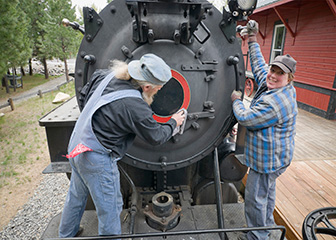
Most heavy vehicle and mobile equipment service technicians have a high school diploma or equivalent. Because vehicle and equipment technology is increasingly sophisticated and computerized, some employers prefer to hire service technicians who have completed a formal training program at a postsecondary institution.
Education
Most heavy vehicle and mobile equipment service technicians have a high school diploma or equivalent. High school courses in automotive repair, electronics, physics, and welding provide a strong foundation for a service technician’s career. However, high school graduates often need further training to become fully qualified.
Completing a vocational or other postsecondary training program in diesel technology or heavy equipment mechanics is increasingly considered the best preparation for some entry-level positions. Offered by vocational schools and community colleges, these programs cover the basics of diagnostic techniques, electronics, and other related subjects. Each program may last 1 to 2 years and lead to a certificate of completion. Other programs, which lead to associate’s degrees, generally take 2 years to complete.
Training
Entry-level workers with no formal background in heavy vehicle repair often receive a few months of on-the-job training before they begin performing routine service tasks and making minor repairs. Trainees advance to more complex work as they show competence, and they usually become fully qualified after 3 to 4 years of work.
Service technicians who have completed a postsecondary training program in diesel technology or heavy equipment mechanics typically require less on-the-job training.
Many employers send new service technicians to training sessions conducted by equipment manufacturers. Training sessions may focus on particular components and technologies or particular types of equipment.
Licenses, Certifications, and Registrations
Some manufacturers offer certification in specific repair methods or equipment. Although not required, certification can demonstrate a service technician’s competence and usually commands higher pay.
Contacts for More Information
For more details about job openings for heavy vehicle and mobile equipment service technicians, consult local heavy and mobile equipment dealers and distributors, construction contractors, and government agencies. Local offices of the state employment service also may have information on job openings and training programs.
For more information about careers and training programs, visit
Associated Equipment Distributors
Similar Occupations
This table shows a list of occupations with job duties that are similar to those of heavy vehicle and mobile equipment service technicians.
| Occupation | Job Duties | Entry-Level Education | Median Annual Pay, May 2022 | |
|---|---|---|---|---|

|
Aircraft and Avionics Equipment Mechanics and Technicians |
Aircraft and avionics equipment mechanics and technicians repair and perform scheduled maintenance on aircraft. |
See How to Become One | $70,740 |

|
Automotive Body and Glass Repairers |
Automotive body and glass repairers restore, refinish, and replace vehicle bodies and frames, windshields, and window glass. |
High school diploma or equivalent | $47,270 |

|
Automotive Service Technicians and Mechanics |
Automotive service technicians and mechanics inspect, maintain, and repair cars and light trucks. |
Postsecondary nondegree award | $46,970 |

|
Diesel Service Technicians and Mechanics |
Diesel service technicians and mechanics inspect, repair, and overhaul buses, trucks, or any vehicle with a diesel engine. |
High school diploma or equivalent | $54,360 |

|
Industrial Machinery Mechanics, Machinery Maintenance Workers, and Millwrights |
Industrial machinery mechanics, machinery maintenance workers, and millwrights install, maintain, and repair factory equipment and other industrial machinery. |
High school diploma or equivalent | $59,470 |

|
Small Engine Mechanics |
Small engine mechanics inspect, service, and repair motorized power equipment. |
See How to Become One | $44,080 |

|
Water Transportation Workers |
Water transportation workers operate and maintain vessels that take cargo and people over water. |
See How to Become One | $66,100 |