
Water or Wastewater Treatment Plant and System Operator
Does this career fit your work personality?
Begin The Career Assessment Test- Best Fitting Careers
- Work Personality Strengths
- Work Style Preferences
- and more
Job Outlook
Employment of water and wastewater treatment plant and system operators is projected to decline 6 percent from 2022 to 2032.
Despite declining employment, about 10,500 openings for water and wastewater treatment plant and system operators are projected each year, on average, over the decade. All of those openings are expected to result from the need to replace workers who transfer to other occupations or exit the labor force, such as to retire.
Education Details
Summary of What they do:
Operate or control an entire process or system of machines, often through the use of control boards, to transfer or treat water or wastewater.
What Water and Wastewater Treatment Plant and System Operators Do
Water and wastewater treatment plant and system operators manage a system of machines, often through the use of control boards, to transfer or treat water or wastewater.
Duties
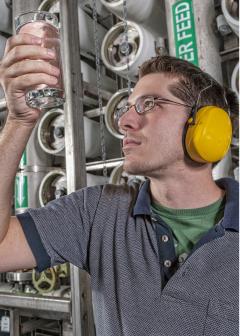
Water and wastewater treatment plant and system operators typically do the following:
- Add chemicals, such as ammonia or chlorine, to disinfect water or other liquids
- Inspect equipment on a regular basis
- Monitor operating conditions, meters, and gauges
- Collect and test water and sewage samples
- Record meter and gauge readings and operational data
- Document and report test results to regulatory agencies
- Operate equipment to purify and clarify water or to process or dispose of sewage
- Clean and maintain equipment, tanks, filter beds, and other work areas
- Follow U.S. Environmental Protection Agency (EPA) regulations
- Ensure safety standards are met
It takes many steps to get water from natural sources—reservoirs, streams, and groundwater—into people’s houses. Similarly, it is a complicated process to convert the wastewater from drains and sewers into a form that is safe to release into the environment.
The specific duties of plant operators depend on the type and size of the plant. In a small plant, one operator may be responsible for maintaining all of the systems. In large plants, multiple operators work the same shifts and are more specialized in their duties, often relying on computerized systems to help them monitor plant processes.
Water and wastewater treatment plant and system operators must be able to manually operate the equipment if there is a plant malfunction due to power outages or electrical issues.
Water treatment plant and system operators work in water treatment plants. Fresh water is pumped from wells, rivers, streams, or reservoirs to water treatment plants, where it is treated and distributed to customers. Water treatment plant and system operators run the equipment, control the processes, and monitor the plants that treat water to make it safe to drink.
Wastewater treatment plant and system operators remove pollutants from domestic and industrial waste. Used water, also known as wastewater, travels through sewer pipes to treatment plants where it is treated and either returned to streams, rivers, and oceans, or used for irrigation.
Important Qualities
Analytical skills. Water and wastewater treatment plant and system operators must conduct tests and inspections on water or wastewater and evaluate the results.
Detail oriented. Water and wastewater treatment plant and system operators must monitor machinery, gauges, dials, and controls to ensure everything is operating properly. Because tap water and wastewater are highly regulated by the U.S. Environmental Protection Agency, operators must be careful and thorough in completing these tasks.
Math skills. Water and wastewater treatment plant and system operators must have the ability to apply data to formulas that determine treatment requirements, flow levels, and concentration levels.
Mechanical skills. Water and wastewater treatment plant and system operators must know how to work with machines and use tools. They must be familiar with how to operate, repair, and maintain equipment.
Tasks On The Job
- Add chemicals, such as ammonia, chlorine, or lime, to disinfect and deodorize water and other liquids.
- Clean and maintain tanks, filter beds, and other work areas, using hand tools and power tools.
- Collect and test water and sewage samples, using test equipment and color analysis standards.
- Direct and coordinate plant workers engaged in routine operations and maintenance activities.
- Inspect equipment or monitor operating conditions, meters, and gauges to determine load requirements and detect malfunctions.
- Maintain, repair, and lubricate equipment, using hand tools and power tools.
- Operate and adjust controls on equipment to purify and clarify water, process or dispose of sewage, and generate power.
- Record operational data, personnel attendance, or meter and gauge readings on specified forms.




PERSONALITY
| Your Assessment Results |
CAREER CHARACTERISTICS
Importance
|
|---|
|
?
? ? ?
|
79% | Integrity - Job requires being honest and ethical. | |
|
?
? ? ?
|
78% | Dependability - Job requires being reliable, responsible, and dependable, and fulfilling obligations. | |
|
?
? ? ?
|
75% | Attention to Detail - Job requires being careful about detail and thorough in completing work tasks. | |
|
?
? ? ?
|
74% | Independence - Job requires developing one's own ways of doing things, guiding oneself with little or no supervision, and depending on oneself to get things done. | |
|
?
? ? ?
|
69% | Initiative - Job requires a willingness to take on responsibilities and challenges. | |
|
?
? ? ?
|
69% | Concern for Others - Job requires being sensitive to others' needs and feelings and being understanding and helpful on the job. | |
|
?
? ? ?
|
67% | Leadership - Job requires a willingness to lead, take charge, and offer opinions and direction. | |
|
?
? ? ?
|
67% | Cooperation - Job requires being pleasant with others on the job and displaying a good-natured, cooperative attitude. | |
|
?
? ? ?
|
66% | Adaptability/Flexibility - Job requires being open to change (positive or negative) and to considerable variety in the workplace. | |
|
?
? ? ?
|
62% | Self-Control - Job requires maintaining composure, keeping emotions in check, controlling anger, and avoiding aggressive behavior, even in very difficult situations. | |
|
?
? ? ?
|
62% | Analytical Thinking - Job requires analyzing information and using logic to address work-related issues and problems. | |
|
?
? ? ?
|
58% | Stress Tolerance - Job requires accepting criticism and dealing calmly and effectively with high-stress situations. | |
|
?
? ? ?
|
57% | Achievement/Effort - Job requires establishing and maintaining personally challenging achievement goals and exerting effort toward mastering tasks. | |
|
?
? ? ?
|
54% | Persistence - Job requires persistence in the face of obstacles. | |
|
?
? ? ?
|
53% | Innovation - Job requires creativity and alternative thinking to develop new ideas for and answers to work-related problems. | |
| Your Assessment Results |
IMPORTANT STRENGTHS
Importance
|
|---|
|
?
? ? ?
|
96% | Realistic - Work involves designing, building, or repairing of equipment, materials, or structures, engaging in physical activity, or working outdoors. Realistic occupations are often associated with engineering, mechanics and electronics, construction, woodworking, transportation, machine operation, agriculture, animal services, physical or manual labor, athletics, or protective services. | |
|
?
? ? ?
|
60% | Conventional - Work involves following procedures and regulations to organize information or data, typically in a business setting. Conventional occupations are often associated with office work, accounting, mathematics/statistics, information technology, finance, or human resources. | |
| Your Assessment Results |
WORK VALUES
Importance
|
|---|
|
?
? ? ?
|
78% | Support - Occupations that satisfy this work value offer supportive management that stands behind employees. Corresponding needs are Company Policies, Supervision: Human Relations and Supervision: Technical. | |
|
?
? ? ?
|
61% | Independence - Occupations that satisfy this work value allow employees to work on their own and make decisions. Corresponding needs are Creativity, Responsibility and Autonomy. | |
APTITUDES
| Your Assessment Results |
ABILITIES | SKILLS
Importance
|
|---|
|
?
? ? ?
|
69% | Oral Comprehension - The ability to listen to and understand information and ideas presented through spoken words and sentences. | |
|
?
? ? ?
|
69% | Oral Expression - The ability to communicate information and ideas in speaking so others will understand. | |
|
?
? ? ?
|
66% | Near Vision - The ability to see details at close range (within a few feet of the observer). | |
|
?
? ? ?
|
63% | Written Comprehension - The ability to read and understand information and ideas presented in writing. | |
|
?
? ? ?
|
63% | Deductive Reasoning - The ability to apply general rules to specific problems to produce answers that make sense. | |
|
?
? ? ?
|
59% | Operations Monitoring - Watching gauges, dials, or other indicators to make sure a machine is working properly. | |
|
?
? ? ?
|
53% | Problem Sensitivity - The ability to tell when something is wrong or is likely to go wrong. It does not involve solving the problem, only recognizing that there is a problem. | |
|
?
? ? ?
|
53% | Inductive Reasoning - The ability to combine pieces of information to form general rules or conclusions (includes finding a relationship among seemingly unrelated events). | |
|
?
? ? ?
|
53% | Information Ordering - The ability to arrange things or actions in a certain order or pattern according to a specific rule or set of rules (e.g., patterns of numbers, letters, words, pictures, mathematical operations). | |
|
?
? ? ?
|
53% | Selective Attention - The ability to concentrate on a task over a period of time without being distracted. | |
|
?
? ? ?
|
53% | Control Precision - The ability to quickly and repeatedly adjust the controls of a machine or a vehicle to exact positions. | |
|
?
? ? ?
|
52% | Monitoring - Monitoring/Assessing performance of yourself, other individuals, or organizations to make improvements or take corrective action. | |
| Your Assessment Results |
TASKS | ACTIVITIES
Importance
|
|---|
|
?
? ? ?
|
87% | Evaluating Information to Determine Compliance with Standards - Using relevant information and individual judgment to determine whether events or processes comply with laws, regulations, or standards. | |
|
?
? ? ?
|
85% | Monitoring Processes, Materials, or Surroundings - Monitoring and reviewing information from materials, events, or the environment, to detect or assess problems. | |
|
?
? ? ?
|
83% | Documenting/Recording Information - Entering, transcribing, recording, storing, or maintaining information in written or electronic/magnetic form. | |
|
?
? ? ?
|
80% | Inspecting Equipment, Structures, or Materials - Inspecting equipment, structures, or materials to identify the cause of errors or other problems or defects. | |
|
?
? ? ?
|
79% | Processing Information - Compiling, coding, categorizing, calculating, tabulating, auditing, or verifying information or data. | |
|
?
? ? ?
|
78% | Making Decisions and Solving Problems - Analyzing information and evaluating results to choose the best solution and solve problems. | |
|
?
? ? ?
|
78% | Identifying Objects, Actions, and Events - Identifying information by categorizing, estimating, recognizing differences or similarities, and detecting changes in circumstances or events. | |
|
?
? ? ?
|
77% | Operating Vehicles, Mechanized Devices, or Equipment - Running, maneuvering, navigating, or driving vehicles or mechanized equipment, such as forklifts, passenger vehicles, aircraft, or watercraft. | |
|
?
? ? ?
|
77% | Analyzing Data or Information - Identifying the underlying principles, reasons, or facts of information by breaking down information or data into separate parts. | |
|
?
? ? ?
|
75% | Getting Information - Observing, receiving, and otherwise obtaining information from all relevant sources. | |
|
?
? ? ?
|
75% | Communicating with Supervisors, Peers, or Subordinates - Providing information to supervisors, co-workers, and subordinates by telephone, in written form, e-mail, or in person. | |
|
?
? ? ?
|
73% | Repairing and Maintaining Mechanical Equipment - Servicing, repairing, adjusting, and testing machines, devices, moving parts, and equipment that operate primarily on the basis of mechanical (not electronic) principles. | |
|
?
? ? ?
|
71% | Controlling Machines and Processes - Using either control mechanisms or direct physical activity to operate machines or processes (not including computers or vehicles). | |
|
?
? ? ?
|
71% | Training and Teaching Others - Identifying the educational needs of others, developing formal educational or training programs or classes, and teaching or instructing others. | |
|
?
? ? ?
|
67% | Updating and Using Relevant Knowledge - Keeping up-to-date technically and applying new knowledge to your job. | |
|
?
? ? ?
|
67% | Organizing, Planning, and Prioritizing Work - Developing specific goals and plans to prioritize, organize, and accomplish your work. | |
|
?
? ? ?
|
64% | Monitoring and Controlling Resources - Monitoring and controlling resources and overseeing the spending of money. | |
|
?
? ? ?
|
64% | Working with Computers - Using computers and computer systems (including hardware and software) to program, write software, set up functions, enter data, or process information. | |
|
?
? ? ?
|
64% | Repairing and Maintaining Electronic Equipment - Servicing, repairing, calibrating, regulating, fine-tuning, or testing machines, devices, and equipment that operate primarily on the basis of electrical or electronic (not mechanical) principles. | |
|
?
? ? ?
|
62% | Scheduling Work and Activities - Scheduling events, programs, and activities, as well as the work of others. | |
|
?
? ? ?
|
60% | Judging the Qualities of Objects, Services, or People - Assessing the value, importance, or quality of things or people. | |
|
?
? ? ?
|
60% | Coaching and Developing Others - Identifying the developmental needs of others and coaching, mentoring, or otherwise helping others to improve their knowledge or skills. | |
|
?
? ? ?
|
59% | Performing for or Working Directly with the Public - Performing for people or dealing directly with the public. This includes serving customers in restaurants and stores, and receiving clients or guests. | |
|
?
? ? ?
|
58% | Performing General Physical Activities - Performing general physical activities includes doing activities that require considerable use of your arms and legs and moving your whole body, such as climbing, lifting, balancing, walking, stooping, and handling materials. | |
|
?
? ? ?
|
57% | Interpreting the Meaning of Information for Others - Translating or explaining what information means and how it can be used. | |
|
?
? ? ?
|
57% | Developing Objectives and Strategies - Establishing long-range objectives and specifying the strategies and actions to achieve them. | |
|
?
? ? ?
|
56% | Guiding, Directing, and Motivating Subordinates - Providing guidance and direction to subordinates, including setting performance standards and monitoring performance. | |
|
?
? ? ?
|
56% | Providing Consultation and Advice to Others - Providing guidance and expert advice to management or other groups on technical, systems-, or process-related topics. | |
|
?
? ? ?
|
56% | Estimating the Quantifiable Characteristics of Products, Events, or Information - Estimating sizes, distances, and quantities; or determining time, costs, resources, or materials needed to perform a work activity. | |
|
?
? ? ?
|
56% | Communicating with People Outside the Organization - Communicating with people outside the organization, representing the organization to customers, the public, government, and other external sources. This information can be exchanged in person, in writing, or by telephone or e-mail. | |
|
?
? ? ?
|
56% | Establishing and Maintaining Interpersonal Relationships - Developing constructive and cooperative working relationships with others, and maintaining them over time. | |
|
?
? ? ?
|
56% | Coordinating the Work and Activities of Others - Getting members of a group to work together to accomplish tasks. | |
|
?
? ? ?
|
54% | Handling and Moving Objects - Using hands and arms in handling, installing, positioning, and moving materials, and manipulating things. | |
|
?
? ? ?
|
53% | Performing Administrative Activities - Performing day-to-day administrative tasks such as maintaining information files and processing paperwork. | |
|
?
? ? ?
|
53% | Developing and Building Teams - Encouraging and building mutual trust, respect, and cooperation among team members. | |
| Your Assessment Results |
CONTEXT | ATTRIBUTES
Importance
|
|---|
|
?
? ? ?
|
96% | E-Mail - How frequently does your job require you to use E-mail? | |
|
?
? ? ?
|
96% | Telephone Conversations - How often do you have telephone conversations in this job? | |
|
?
? ? ?
|
95% | Face-to-Face Discussions with Individuals and Within Teams - How frequently does your job require face-to-face discussions with individuals and within teams? | |
|
?
? ? ?
|
91% | Outdoors, Exposed to All Weather Conditions - How often does this job require working outdoors, exposed to all weather conditions? | |
|
?
? ? ?
|
90% | In an Enclosed Vehicle or Operate Enclosed Equipment - How often does this job require working in a closed vehicle or operate enclosed equipment (like a car)? | |
|
?
? ? ?
|
89% | Wear Common Protective or Safety Equipment such as Safety Shoes, Glasses, Gloves, Hearing Protection, Hard Hats, or Life Jackets - How often does this job require wearing common protective or safety equipment such as safety shoes, glasses, gloves, hearing protection, hard hats or life-jackets? | |
|
?
? ? ?
|
88% | Indoors, Not Environmentally Controlled - How often does this job require working in an environment that is not environmentally controlled (like a warehouse without air conditioning)? | |
|
?
? ? ?
|
82% | Exposed to Contaminants - How often does this job require working exposed to contaminants (such as pollutants, gases, dust or odors)? | |
|
?
? ? ?
|
80% | Exposed to Sounds, Noise Levels that are Distracting or Uncomfortable - How often does this job require working exposed to sounds and noise levels that are distracting or uncomfortable? | |
|
?
? ? ?
|
79% | Indoors, Environmentally Controlled - How often does this job require working indoors in an environmentally controlled environment (like a warehouse with air conditioning)? | |
|
?
? ? ?
|
79% | Exposed to Hazardous Conditions - How often does this job require exposure to hazardous conditions? | |
|
?
? ? ?
|
78% | Freedom to Make Decisions - How much decision making freedom, without supervision, does the job offer? | |
|
?
? ? ?
|
77% | Work With or Contribute to a Work Group or Team - How important is it to work with or contribute to a work group or team in this job? | |
|
?
? ? ?
|
77% | Health and Safety of Other Workers - How much responsibility is there for the health and safety of others in this job? | |
|
?
? ? ?
|
76% | Importance of Being Exact or Accurate - How important is being very exact or highly accurate in performing this job? | |
|
?
? ? ?
|
75% | Determine Tasks, Priorities and Goals - How much freedom does the worker have in determining the tasks, priorities, or goals of the job? | |
|
?
? ? ?
|
75% | Contact With Others - How much does this job require the worker to be in contact with others (face-to-face, by telephone, or otherwise) in order to perform it? | |
|
?
? ? ?
|
75% | Time Pressure - How often does this job require the worker to meet strict deadlines? | |
|
?
? ? ?
|
73% | Outdoors, Under Cover - How often does this job require working outdoors, under cover (like in an open shed)? | |
|
?
? ? ?
|
72% | Exposed to Hazardous Equipment - How often does this job require exposure to hazardous equipment? | |
|
?
? ? ?
|
71% | Frequency of Decision Making - How often is the worker required to make decisions that affect other people, the financial resources, and/or the image and reputation of the organization? | |
|
?
? ? ?
|
68% | Importance of Repeating Same Tasks - How important are continuous, repetitive, physical activities (like key entry) or mental activities (like checking entries in a ledger) to performing this job? | |
|
?
? ? ?
|
68% | Consequence of Error - How serious would the result usually be if the worker made a mistake that was not easily correctable? | |
|
?
? ? ?
|
68% | Physical Proximity - To what extent does this job require the worker to perform job tasks physically close to other people? | |
|
?
? ? ?
|
66% | Impact of Decisions on Co-workers or Company Results - What results do your decisions usually have on other people or the image or reputation or financial resources of your employer? | |
|
?
? ? ?
|
65% | Exposed to Very Hot or Cold Temperatures - How often does this job require working in very hot (above 90 F degrees) or very cold (below 32 F degrees) temperatures? | |
|
?
? ? ?
|
64% | Written Letters and Memos - How frequently does your job require written letters and memos? | |
|
?
? ? ?
|
62% | Work Outcomes and Results of Other Workers - How responsible is the worker for work outcomes and results of other workers? | |
|
?
? ? ?
|
62% | Spend Time Using Your Hands to Handle, Control, or Feel Objects, Tools, or Controls - How much does this job require using your hands to handle, control, or feel objects, tools or controls? | |
|
?
? ? ?
|
62% | Deal With External Customers or the Public in General - How important is it to deal with external customers (as in retail sales) or the public in general (as in police work) in this job? | |
|
?
? ? ?
|
60% | Exposed to Cramped Work Space, Awkward Positions - How often does this job require working in cramped work spaces that requires getting into awkward positions? | |
|
?
? ? ?
|
60% | Spend Time Standing - How much does this job require standing? | |
|
?
? ? ?
|
57% | Exposed to Disease or Infections - How often does this job require exposure to disease/infections? | |
|
?
? ? ?
|
57% | Coordinate or Lead Others in Accomplishing Work Activities - How important is it to coordinate or lead others (not as a supervisor or team leader) in accomplishing work activities in this job? | |
|
?
? ? ?
|
57% | In an Open Vehicle or Operating Equipment - How often does this job require working in an open vehicle or operating equipment (like a tractor)? | |
|
?
? ? ?
|
52% | Exposed to Extremely Bright or Inadequate Lighting Conditions - How often does this job require working in extremely bright or inadequate lighting conditions? | |
|
?
? ? ?
|
51% | Degree of Automation - How automated is the job? | |
|
?
? ? ?
|
67% | Duration of Typical Work Week - Number of hours typically worked in one week. | |
Work Environment
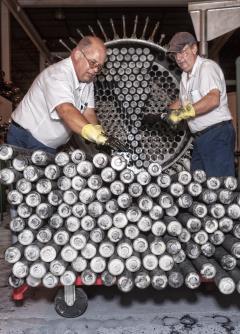
Water and wastewater treatment plant and system operators held about 124,800 jobs in 2022. The largest employers of water and wastewater treatment plant and system operators were as follows:
| Local government, excluding education and hospitals | 74% |
| Utilities | 12 |
| Manufacturing | 4 |
Water and wastewater treatment plant and system operators work both indoors and outdoors. Their work is physically demanding and usually is performed in locations that are unclean or difficult to access. Operators may be exposed to noise from machinery and are often exposed to unpleasant odors.
Injuries and Illnesses
Water and wastewater treatment plant and system operators sometimes get injured on the job. They must pay close attention to safety procedures because of hazardous conditions, such as slippery walkways, the presence of dangerous gases, and malfunctioning equipment.
Operators are trained in emergency management procedures and use safety equipment to protect their health, as well as that of the public.
Work Schedules
Water and waste treatment plant and system operators typically work full time. Plants operate 24 hours a day, 7 days a week. In small plants, operators are likely to work during the day and be on call nights and weekends. In medium- and large-size plants that require constant monitoring, operators work in shifts to control the plant at all hours.
Occasionally, operators must work during emergencies. For example, they may need to work during weather conditions that cause large amounts of storm water or wastewater to flow into sewers, exceeding a plant’s capacity. Emergencies also may be caused by malfunctions within a plant, such as chemical leaks or oxygen deficiencies.
Getting Started
How to Become a Water or Wastewater Treatment Plant and System Operator
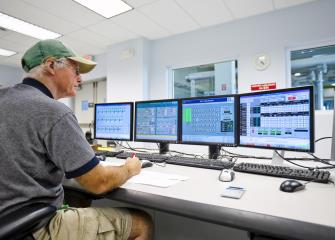
Water and wastewater treatment plant and system operators typically need at least a high school diploma or equivalent and a license to work. They also complete on-the-job training.
Education
Water and wastewater treatment plant and system operators typically need a high school diploma or equivalent to become operators. Employers may prefer applicants who have completed a certificate, an associate’s, or a bachelor’s degree program in a related field such as environmental science or wastewater treatment technology.
Training
Water and wastewater treatment plant and system operators need long-term on-the-job training to become fully qualified. Water and wastewater treatment is a complex process. Trainees learn their skills on the job under the direction of an experienced operator. The trainees learn by observing and doing routine tasks, such as recording meter readings, taking samples of wastewater and sludge, and performing simple maintenance and repair work on plant equipment. They also learn about industrial safety and how to use personal protective equipment.
Larger treatment plants usually combine this on-the-job training with formal classroom or self-paced study programs. As plants get larger and more complicated, operators need more skills before they are allowed to work without supervision.
Licenses, Certifications, and Registrations
Water and wastewater treatment plant and system operators must be licensed by the state in which they work. Requirements and standards vary widely depending on the state.
State licenses typically have multiple levels, which indicate the operator’s experience and training. Although some states will honor licenses from other states, operators who move from one state to another may need to take a new set of exams to become licensed in their new state.
Advancement
Most states have multiple levels of licenses for water and wastewater treatment plant and system operators. Each increase in license level allows the operator to perform more complicated processes without supervision.
At the largest plants, operators who have the highest license level work as shift supervisors and may be in charge of large teams of operators.
Contacts for More Information
For information on employment opportunities, contact state or local water pollution control agencies, state water and wastewater operator associations, state environmental training centers, or local offices of the state employment service.
For information related to a career as a water or wastewater treatment plant and system operator, visit
American Water Works Association
The National Rural Water Association
For more information on certification for water or wastewater treatment plant and system operator, visit
Similar Occupations
This table shows a list of occupations with job duties that are similar to those of water and wastewater treatment plant and system operators.
| Occupation | Job Duties | Entry-Level Education | Median Annual Pay, May 2022 | |
|---|---|---|---|---|

|
Construction Equipment Operators |
Construction equipment operators drive, maneuver, or control the heavy machinery used to construct roads, buildings, and other structures. |
High school diploma or equivalent | $51,050 |

|
General Maintenance and Repair Workers |
General maintenance and repair workers fix and maintain machines, mechanical equipment, and buildings. |
High school diploma or equivalent | $44,980 |

|
Power Plant Operators, Distributors, and Dispatchers |
Power plant operators, distributors, and dispatchers control the systems that generate and distribute electric power. |
High school diploma or equivalent | $97,570 |

|
Stationary Engineers and Boiler Operators |
Stationary engineers and boiler operators control stationary engines, boilers, or other mechanical equipment. |
High school diploma or equivalent | $67,120 |

|
Hydrologists |
Hydrologists study how water moves across and through the Earth’s crust. |
Bachelor's degree | $85,990 |

|
Hazardous Materials Removal Workers |
Hazardous materials removal workers identify and dispose of harmful substances such as asbestos, lead, and radioactive waste. |
High school diploma or equivalent | $46,690 |